
Test method 06
Exposure of wood coatings to artificial weathering – QUV
What does this mean for you?
You can check much earlier which solution better retains its surface properties during exposure to weathering factors.
- Standard
- PN-EN 927-6
- Specimens
- 150 × 75 mm, thickness up to 10 mm
- Assessments
- after 2, 6 and 12 weeks
- Simulation
- 12 weeks ≈ 5 years outdoors
Method description
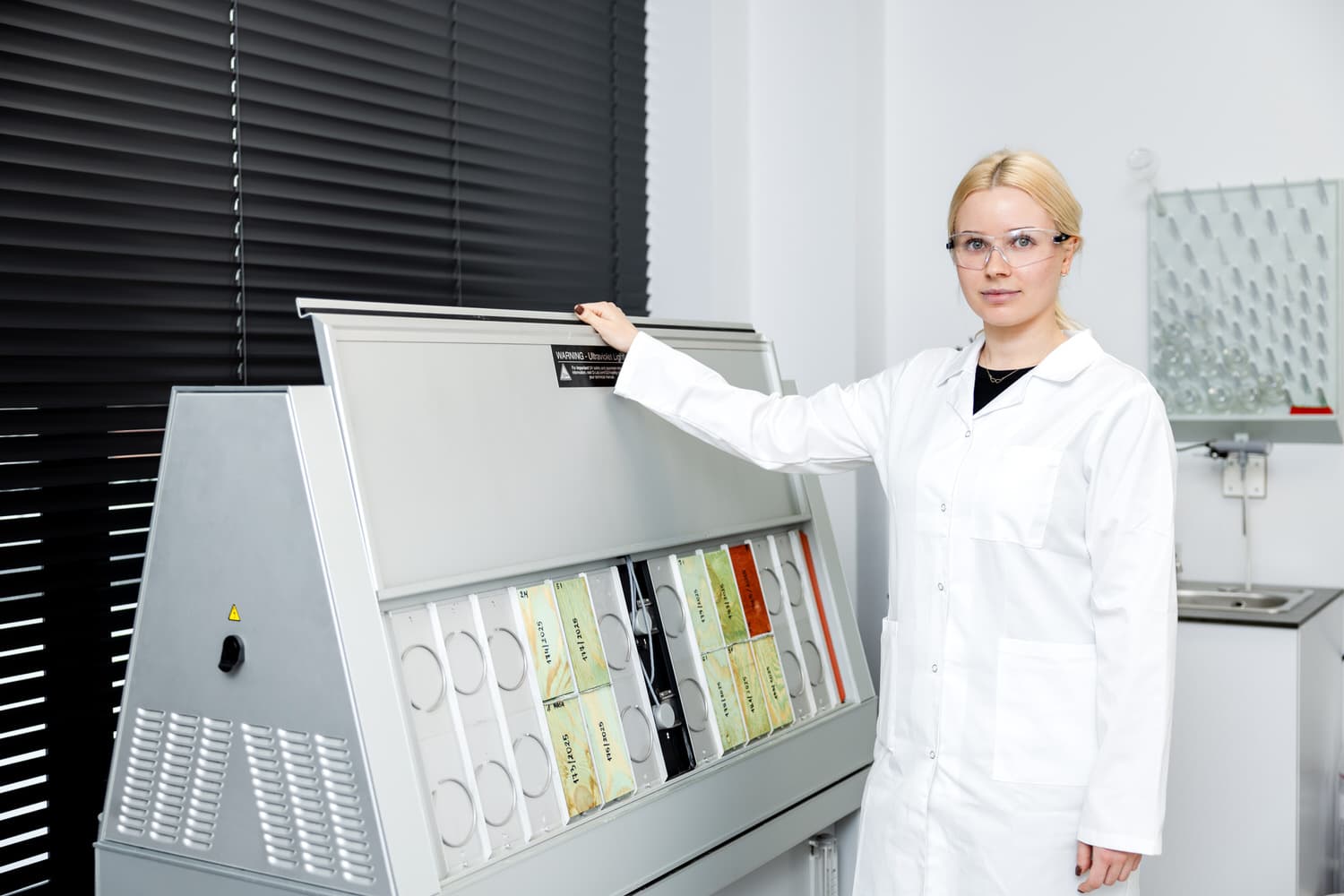
The QUV test makes it possible to assess, in an accelerated manner, the changes occurring in coatings and wooden surfaces under artificially reproduced weather conditions.
The specimens are placed in an accelerated ageing test chamber and subjected to alternating stages of condensation, UV radiation and water spray.
During the test, changes in the appearance of the surface are analysed, including:
- loss of gloss
- cracking
- blistering
- colour changes
The growth of microorganisms, e.g. mould, cannot be reproduced in QUV. In such cases, laboratory tests can be supplemented by testing under natural conditions at the field station.
Business impact: faster comparison of coatings and technologies, earlier detection of weak solutions and a reduced risk of costly changes after the product has been implemented.
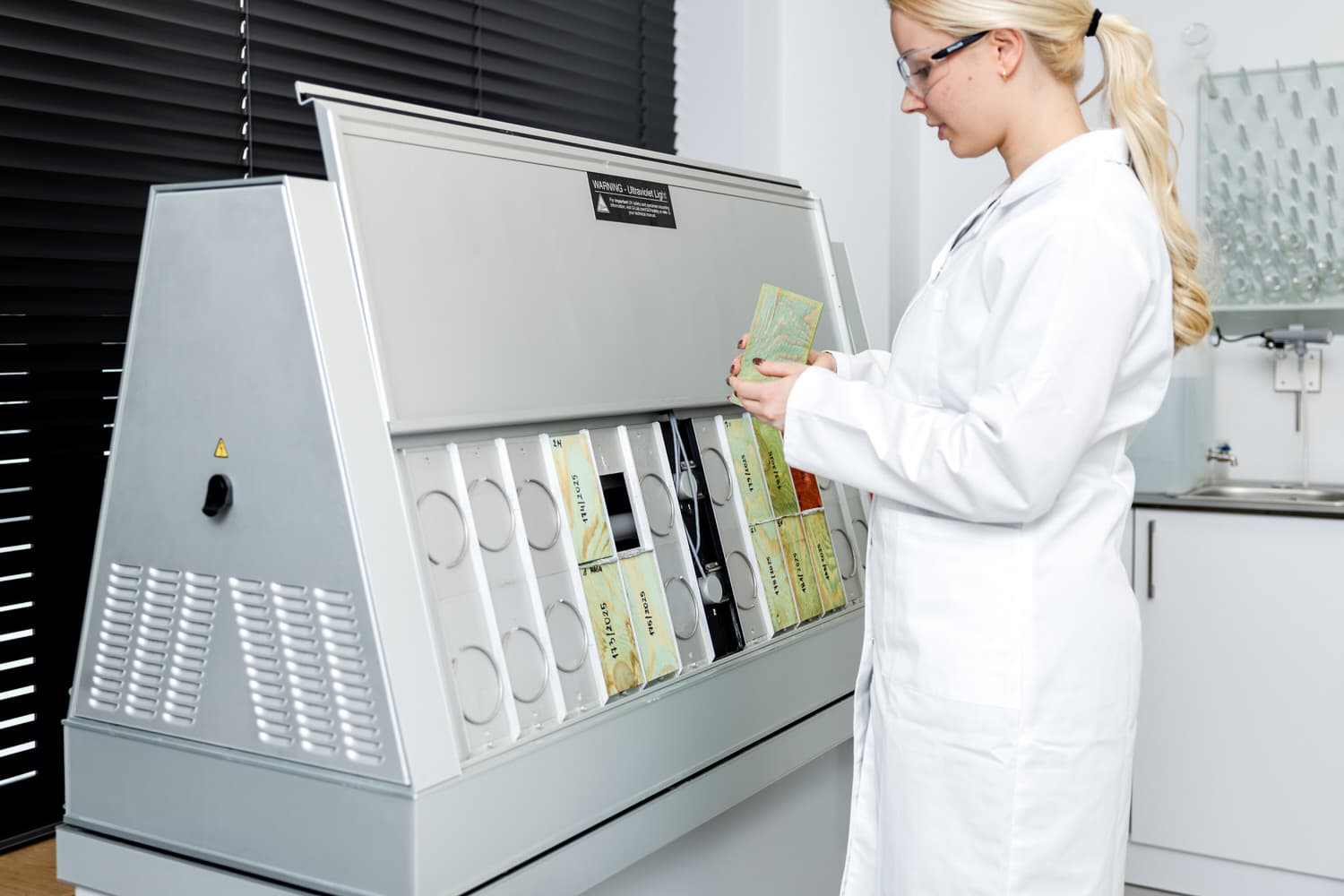
Test specimens
Specimens measuring 150 × 75 mm, maximum thickness 10 mm.
Assessment is carried out after 2, 6 and 12 weeks of exposure, in accordance with the adopted test programme. 12 weeks in the QUV chamber simulates approximately 5 years of outdoor exposure.
Benefit: you can observe the rate and nature of surface changes at successive stages of exposure, not just the final result.
Test standard
The test is performed in accordance with PN-EN 927-6.
Benefit: accelerated ageing takes place according to a defined procedure that makes it possible to compare different variants of coatings and surfaces.
Applications of the test method
Construction
Assessment of the durability of coatings and wooden surfaces intended for exposure to changing weather conditions.
Building joinery
Comparison of protection systems for wooden surfaces used in exterior elements, among other applications.
Furniture industry and outdoor furnishings
Assessment of changes in the surfaces of wooden elements and coatings intended for products exposed to outdoor conditions.
Manufacturers of paints, varnishes and coatings
Comparison of the durability of different formulations and wood protection systems during accelerated ageing.
Wood industry
Assessment of the impact of different methods of protecting and finishing wood on surface durability.
R&D and material development
Comparison of new technologies, formulations and surface variants, and their qualification for further applications.
The test makes it possible to:
- assess colour changes
- assess loss of gloss
- observe cracking and blistering
- compare the resistance of different coatings
- observe changes after 2, 6 and 12 weeks
- compare technological variants
- support development work and material qualification
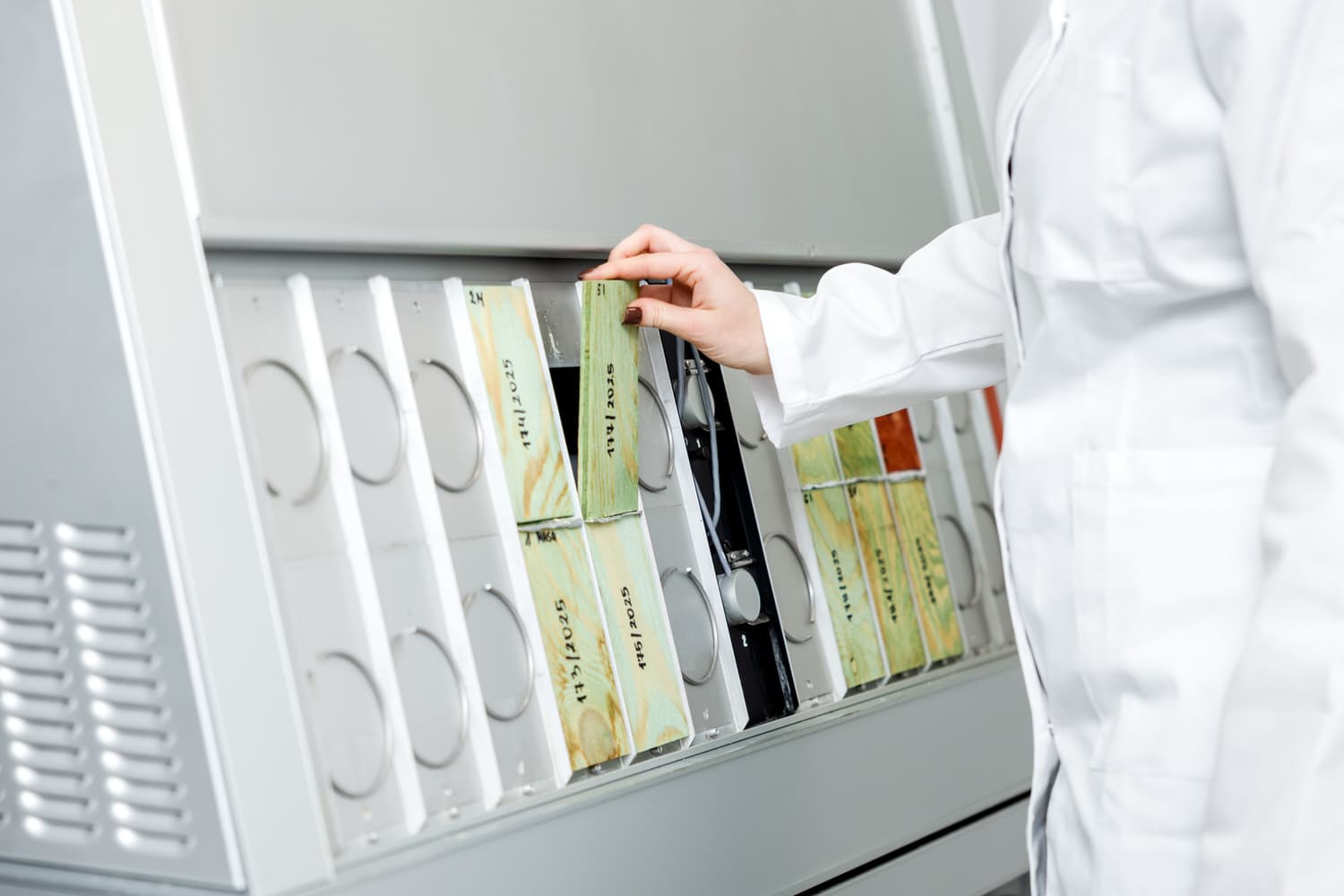
You can see earlier how the surface changes and choose a more durable solution before it is implemented.
Contact
Let's talk about your research challenge.
Describe the scope; we will select the method, plan the test and confirm the terms of cooperation.