Test method 01
Flammability testing using a cone calorimeter
What does this mean for you?
You can check precisely how a material behaves under the influence of fire and heat before it is used in a finished product.
- Standards
- ISO 5660-1 · PN-EN 45545-2
- Specimens
- 4, including 1 spare
- Specimen dimensions
- 100 × 100 mm, thickness up to 50 mm
- Test duration
- 60–90 minutes for 3 specimens
Method description
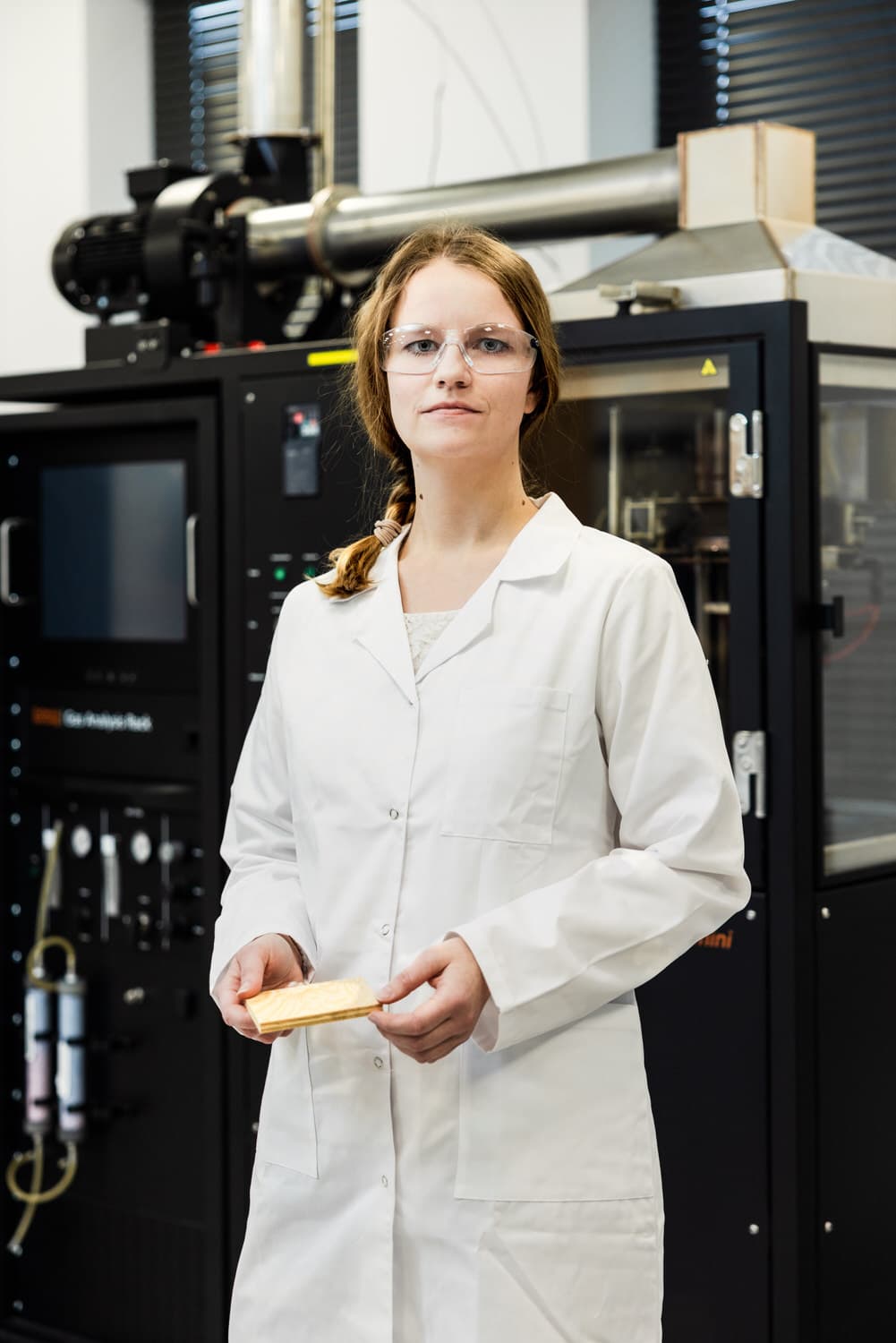
The cone calorimeter makes it possible to examine in detail how a material behaves when exposed to an intense source of heat and fire. A horizontally positioned specimen is exposed to an external heat source and a spark igniter.
During the test, the parameters measured include the amount of heat released, the amount of smoke produced and mass loss. The time to ignition and the time to extinguishment are recorded, as well as additional phenomena such as spalling, flashing or swelling of the material. The amount of heat produced is calculated from the decrease in oxygen concentration.
The test provides data that make it possible to compare different materials and the influence of the manufacturing technology on their behaviour under fire conditions.
Business impact: greater product safety, faster material selection and a reduced risk of costly changes at later stages of the project.
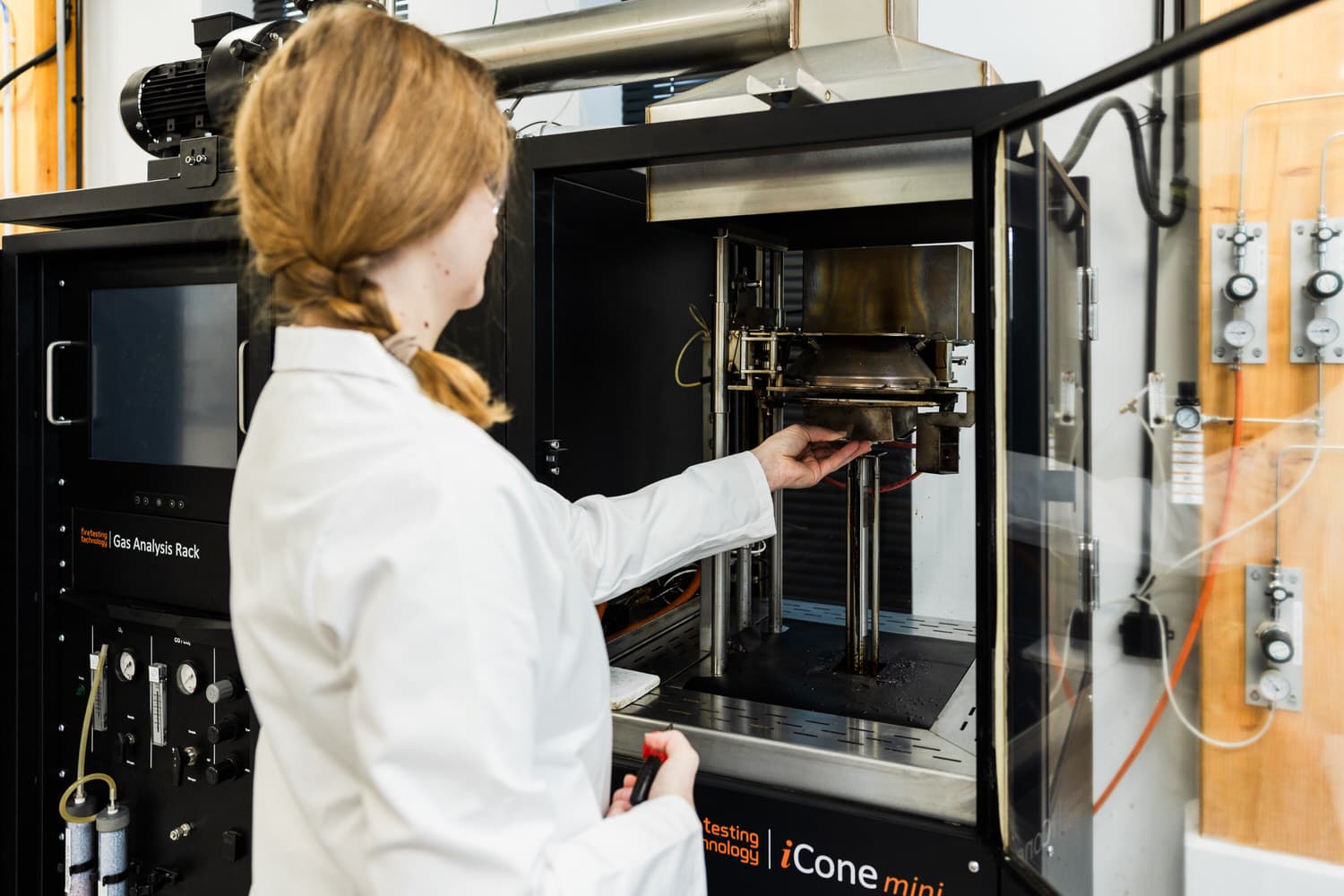
See how the test is carried out
Test specimens
The test is performed in 3 replicates. We recommend supplying 4 specimens, including one spare.
Specimen dimensions: 100 × 100 mm, maximum thickness 50 mm.
For thicker materials, a layer must be cut off from the unexposed side to obtain the required thickness.
Testing one specimen takes about 20 minutes; a set of three specimens is usually tested within 60–90 minutes.
Benefit: within a short time you can compare the behaviour of several materials or product variants and choose a solution for further development.
Test standard
Tests are carried out in accordance with ISO 5660-1 and PN-EN 45545-2.
For railways, the method is used to assess compliance with requirements R1, R2, R3, R5, R6, R7, R8, R9, R10, R11, R12, R17, R19, R20 and R21 according to PN-EN 45545-2.
Benefit: you receive results obtained using a standardised method, which can support the qualification of a material for demanding applications.
Applications of the test method
Railways
Assessment of the fire performance of materials used in rail vehicles and of their compliance with the relevant requirements of PN-EN 45545-2.
Transport
Comparison of how materials and components intended for the fit-out of means of transport behave when exposed to fire.
Construction
Assessment of the behaviour of structural and finishing materials under the influence of a heat source and fire.
Furniture industry and interior furnishings
Comparison of materials intended for applications in which properties related to fire safety are important.
Manufacturers of materials and components
Comparative testing of new formulations, constructions and technologies as part of product development.
The test makes it possible to:
- determine the amount of heat released
- assess the amount of smoke produced
- determine the time to ignition and the time to extinguishment
- analyse mass loss
- observe the behaviour of the material during exposure to fire
- compare different material and technological variants
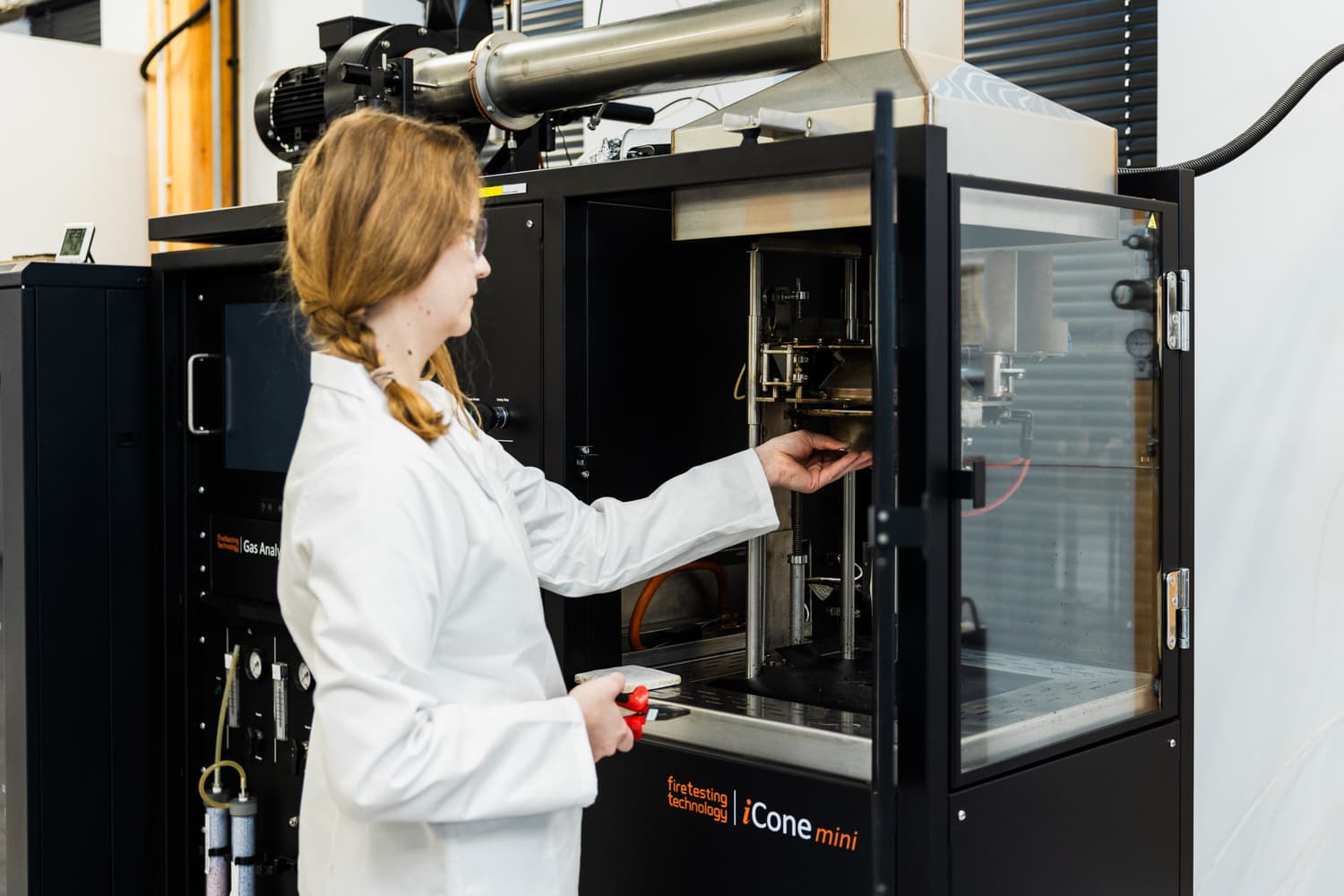
You receive measurable data showing not only whether a material ignites, but how it behaves when exposed to fire.
Contact
Let's talk about your research challenge.
Describe the scope; we will select the method, plan the test and confirm the terms of cooperation.