Test method 03
Formaldehyde emission testing by the chamber method
What does this mean for you?
You can precisely determine the level of formaldehyde emission from a material and monitor it until it reaches a stable value.
- Standard
- EN 717-1
- Chamber
- 0.225 m³
- Specimens
- 2, 200 × 280 mm × panel thickness
- Test duration
- 10–28 days
Method description
The chamber test makes it possible to determine formaldehyde emission from a material under controlled conditions until a stable emission level is reached.
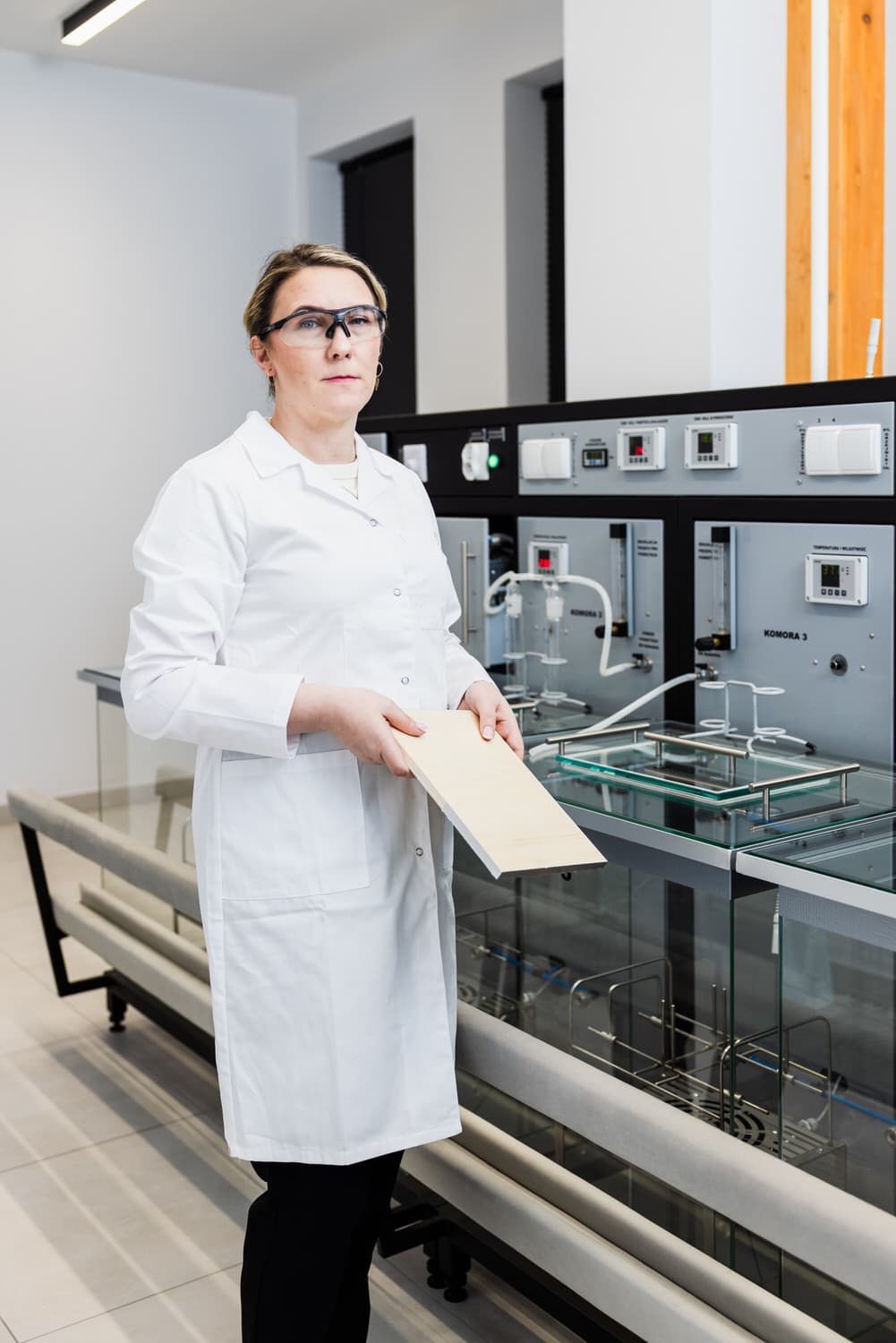
The specimens are placed in a chamber with a volume of 0.225 m³, in which the temperature, relative humidity, air velocity and air exchange rate are controlled.
Formaldehyde emitted by the material mixes with the air in the chamber. Air is sampled periodically and passed through gas washing bottles containing water, which absorbs the formaldehyde. The formaldehyde concentration in the chamber atmosphere is calculated in mg/m³ from its concentration in the water and the volume of air sampled.
Business impact: greater confidence when selecting materials for products intended for interiors and a reduced risk of using a solution with an undesirable emission level.
Test specimens
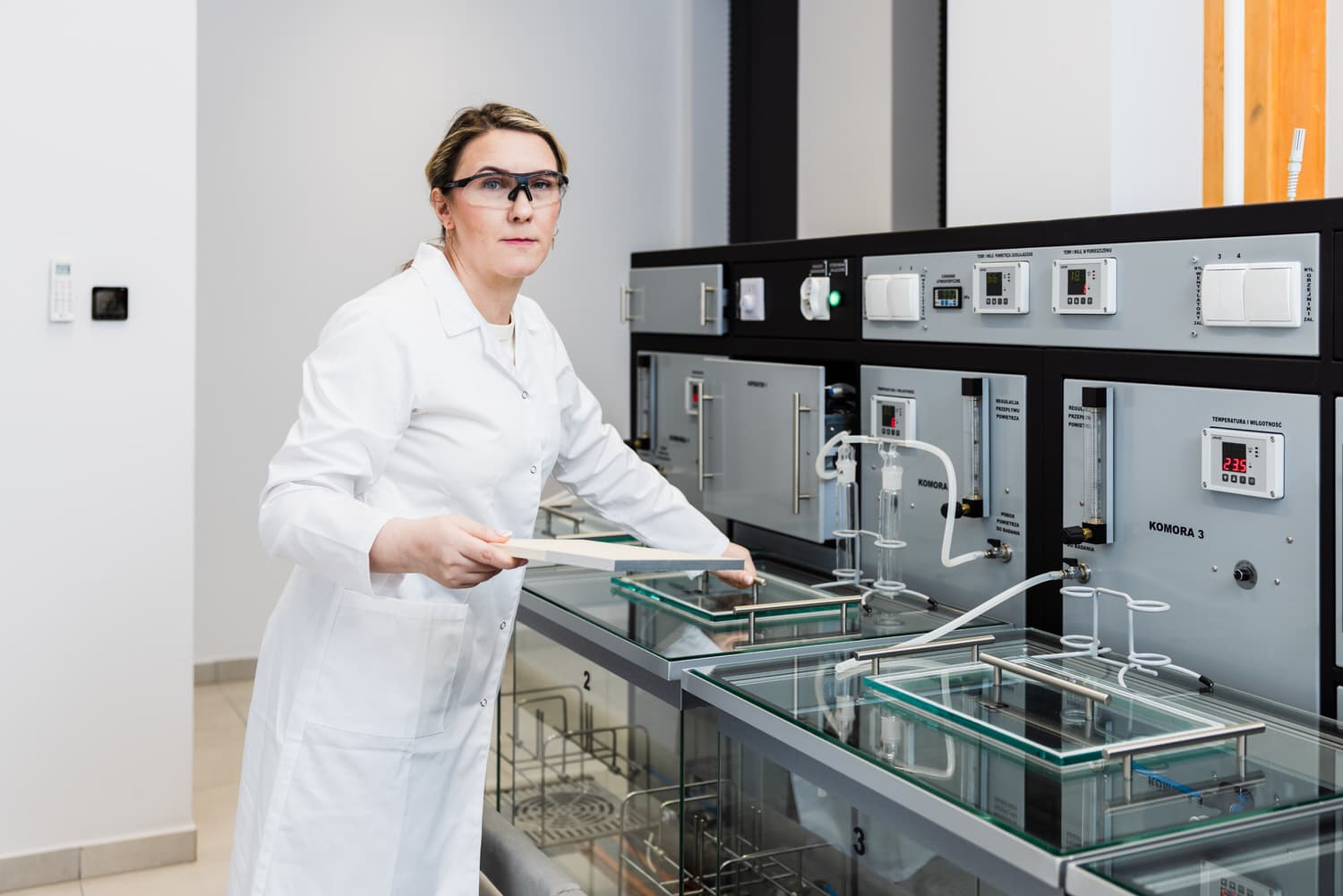
The standard specimen size for the 0.225 m³ chamber is 200 × 280 mm × panel thickness.
The chamber is loaded with two specimens.
The test lasts 10–28 days, until a stable emission level is reached.
Benefit: you receive a result that takes into account the behaviour of the material over time, until the emission stabilises.
Test standard
The test is performed in accordance with EN 717-1.
Benefit: emission is determined using a standardised chamber method that enables a reliable assessment of the material.
Applications of the test method
Furniture industry
Assessment of formaldehyde emission from wood-based materials used in furniture production.
Construction
Testing of wood and wood-based products used inside buildings.
Interior furnishings and finishing
Assessment of materials used in fit-outs and furnishing elements of rooms.
Toy industry and products for children
Testing of new resin-bonded wooden toys in view of the requirements concerning formaldehyde emission.
The test makes it possible to:
- Determine the formaldehyde concentration
- observe changes in emission over time
- determine the stable emission level
- compare different materials and technologies
- assess the impact of changes in materials or bonding technology on formaldehyde emission
You receive measurable data showing the actual level of formaldehyde emission under defined and controlled test conditions.
Contact
Let's talk about your research challenge.
Describe the scope; we will select the method, plan the test and confirm the terms of cooperation.