Test method 07
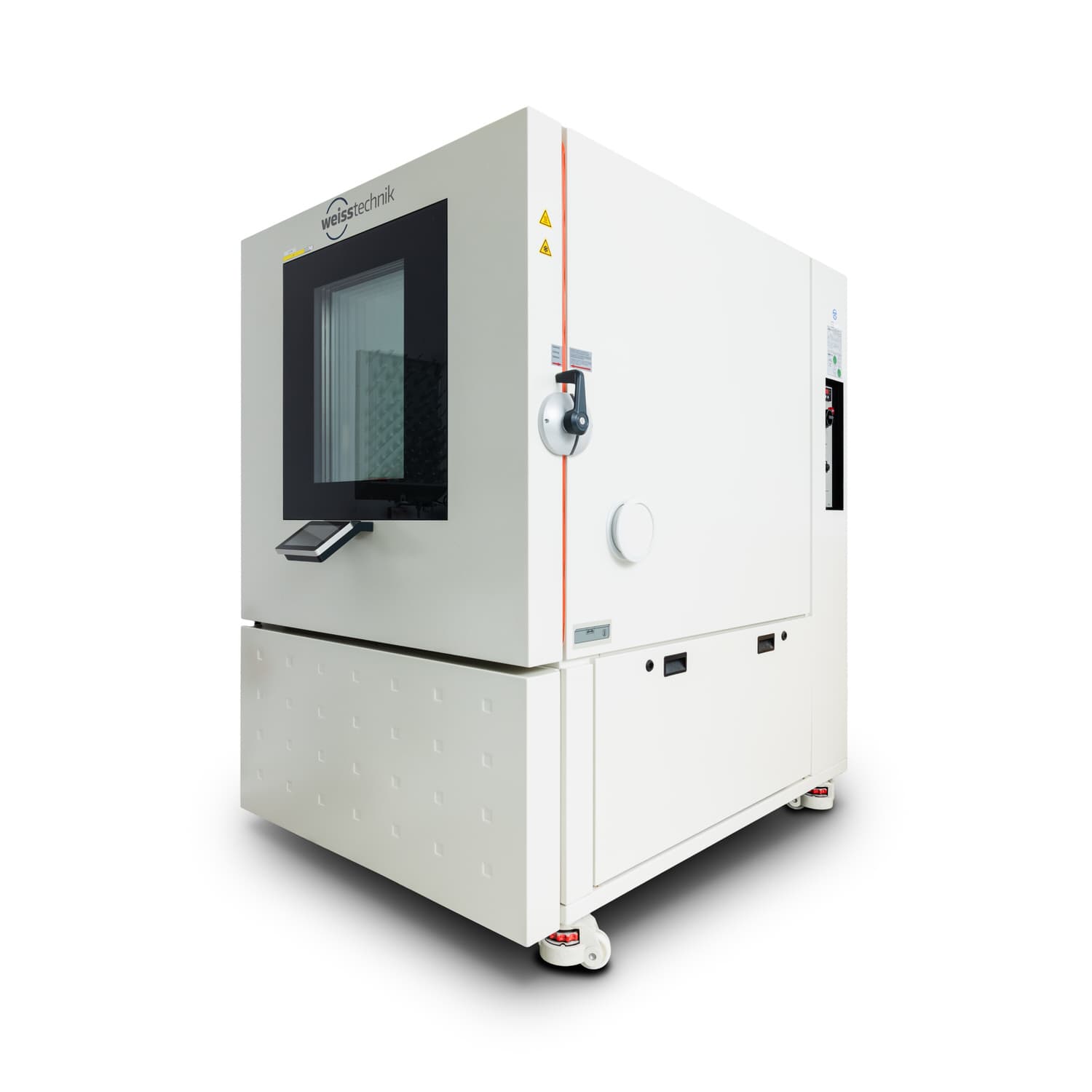
Climatic chamber for simulating weather conditions (thermal shock chamber)
What does this mean for you?
You can check how your product will behave a year from now – within a single week.
- Standard
- EN ISO 6270-2:2018
- Temperature
- from -45°C to +180°C
- Relative humidity
- up to 98%
- Specimens
- various formats, including components of finished products
Method description
The climatic chamber makes it possible to reproduce, in a controlled manner, the most demanding environmental conditions – from frost to extreme temperatures and high humidity. It operates in the range from -45°C to +180°C and at relative humidity of up to 98%, which enables precise replication of the real service conditions of materials.
The test makes it possible to predict changes that in real use appear only after a long time, such as:
- loss of colour and gloss
- surface cracking and blistering
- degradation of the material structure
The chamber is particularly effective in assessing the behaviour of materials under extreme conditions – where standard tests provide no answers. It enables rapid comparison of material variants, technologies or suppliers.
Business impact: shorter time to market, fewer complaints, greater confidence in material decisions.
Test specimens
The method offers great flexibility – various specimen formats are permitted, which makes it possible to test both materials and components of finished products.
Proper arrangement of the specimens in the chamber is essential, as it ensures uniform exposure to the test conditions and reliable results.
Benefit: the possibility of testing real components, not just laboratory specimens.
Test standard
Tests are carried out in accordance with the standard EN ISO 6270-2:2018, and the wide range of the chamber's operating parameters makes it possible to design tests tailored to a specific application and target market.
The method can be combined with other tests (mechanical, chemical, fire) to assess the impact of ageing on the key properties of the material.
Benefit: a fuller picture of product behaviour – not only “here and now”, but throughout its entire life cycle.
Applications of the test method
The test is applicable wherever a material operates under changing or demanding environmental conditions:
Construction
Verification of the durability of structural and finishing materials exposed to changing weather conditions.
Transport (road and rail)
Assessment of the resistance of materials to extreme temperatures and humidity under service conditions.
Furniture industry and interior furnishings
Testing the stability and durability of products used in different climatic conditions.
Materials and industrial chemistry
Assessment of the behaviour of adhesives, coatings, silicones and protective agents under accelerated ageing conditions.
The test makes it possible to:
- assess the suitability of materials for exterior applications
- verify the durability of adhesive joints and coatings
- analyse resistance to cyclic changes in temperature and humidity
- qualify materials for specific use classes
You make decisions based on data, not assumptions.
Contact
Let's talk about your research challenge.
Describe the scope; we will select the method, plan the test and confirm the terms of cooperation.